
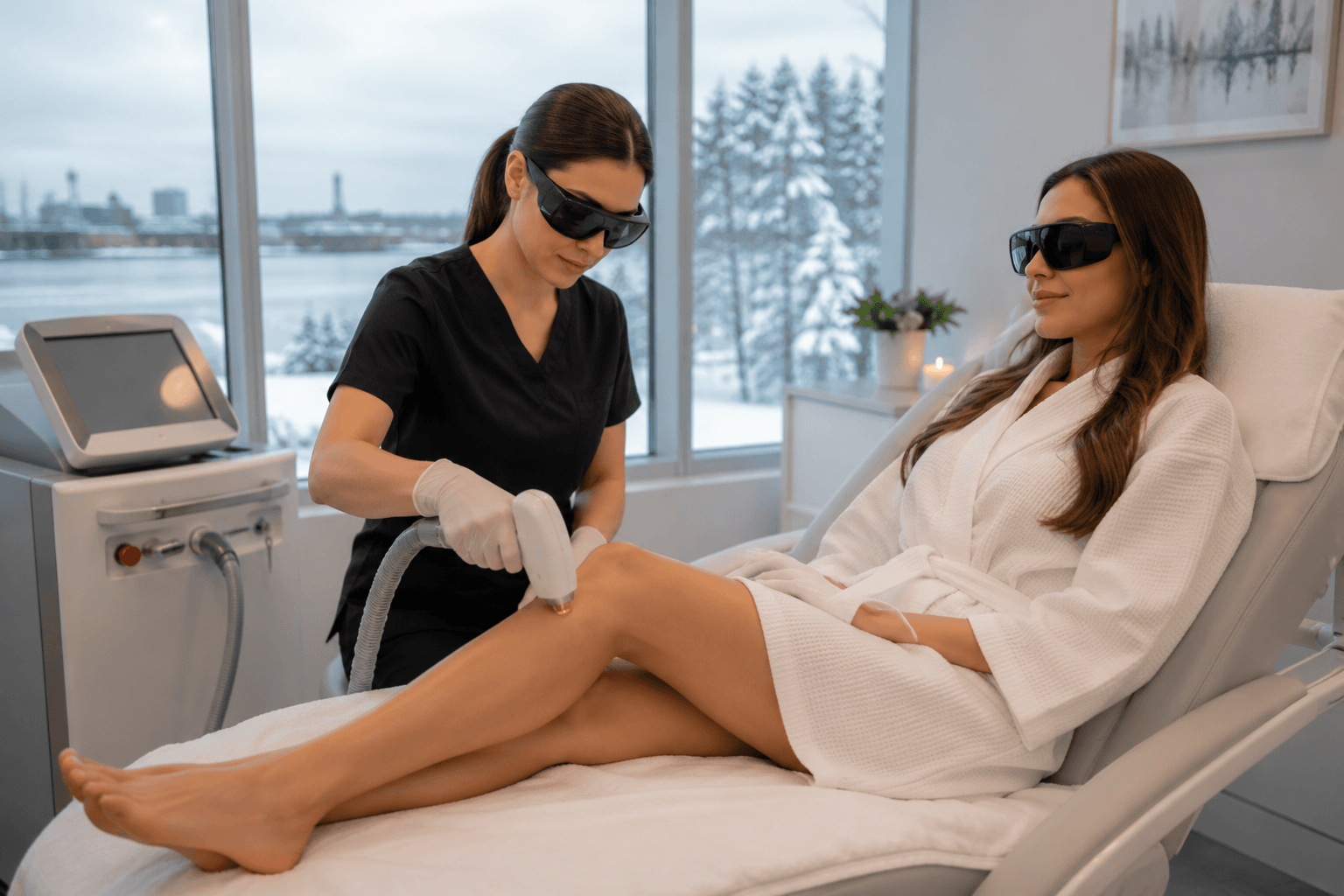
Every spring, the same thing happens at medspas across Erie. As soon as temperatures climb, laser hair removal bookings spike, and every one of those new clients asks the same disappointed question: why can I not just finish this in a few weeks before summer starts? The honest answer is that laser hair removal was never designed to be a quick fix, and starting in spring or summer is actually the hardest time to get consistent, safe results.
If you have been putting off laser hair removal until "swimsuit season gets closer," this is the guide that explains why flipping that timeline, and starting during Erie's long gray winter instead, sets you up for smoother skin by the time it actually matters.
Why Does Skin Need to Be Sun Free Before and After Laser Hair Removal?
Laser hair removal works by targeting the pigment (melanin) in the hair follicle with a concentrated beam of light, which damages the follicle enough to slow or stop future growth. The problem is that the laser cannot always tell the difference between melanin in a hair follicle and melanin in tanned or sun exposed skin.
When skin is tanned, treatments have to be done at lower, more conservative settings to avoid burns or pigment changes, which means less effective results per session. Sun exposure in the days after a treatment is just as risky, since freshly treated follicles are more sensitive and can develop dark or light spots if exposed to UV rays before they heal. This is exactly why most reputable providers require several weeks of sun avoidance both before and after each session.
How Does Erie's Winter Weather Actually Help Laser Hair Removal?
Erie's lake effect winters are famously overcast, which is normally the complaint every local has about the season. For laser hair removal, that same lack of direct sun exposure is a genuine advantage. Skin naturally stays at its lightest, most consistent tone through the winter months, without the tan lines, farmer's tan, or spotty color that summer activities create.
That consistency lets treatments run at more effective settings across the whole treatment area, since the provider is not compensating for uneven pigment. It also removes the guesswork of scheduling around beach trips, lake days at Presque Isle, or outdoor plans that make consistent, spaced out sessions harder to stick to between May and September.
How Many Sessions Does Laser Hair Removal Take, and Why Does Spacing Matter?
Hair grows in cycles, and laser hair removal only works on follicles that are in an active growth phase at the time of treatment. Since not all follicles are in that phase simultaneously, most areas require a series of sessions, typically six to eight, spaced four to six weeks apart, to catch hair as it cycles through.
Starting in late fall or winter means that full series can be completed indoors, during a season when skin is already covered by clothing, well before you would want smooth skin for shorts, swimsuits, or sleeveless outfits. Starting in April or May, by contrast, often means finishing the series mid summer, right when sun exposure is hardest to avoid and results are hardest to protect.
Which Areas Do Erie Clients Most Often Treat With Laser?
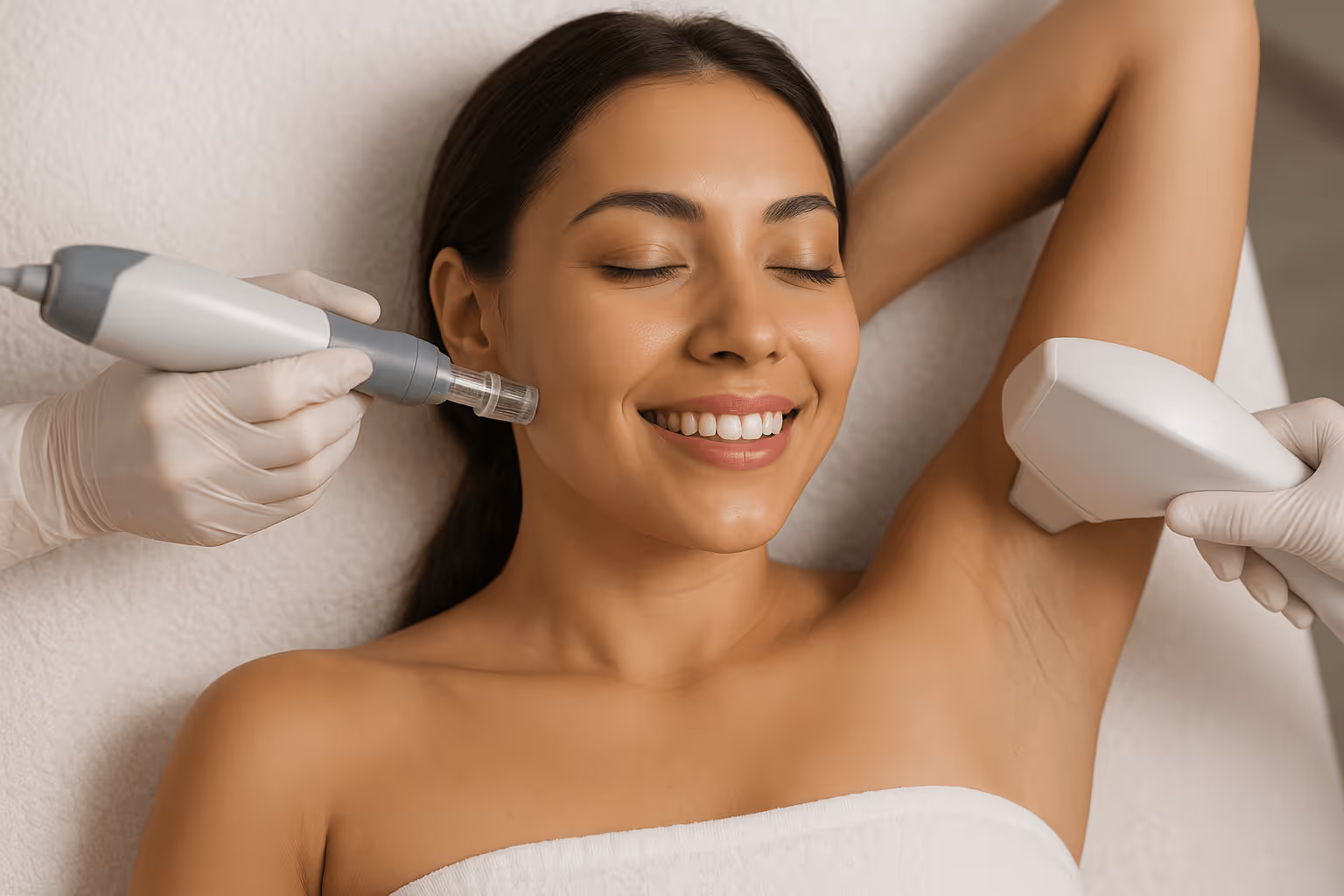
Underarms, legs, bikini area, and upper lip are consistently the most requested treatment areas, along with back and chest treatments for men. Facial areas in particular benefit from starting early, since facial skin tends to be more reactive and needs adequate healing time between sessions without added sun exposure from daily outdoor activity.
What Should I Expect During a Laser Hair Removal Session?
Most sessions are relatively quick depending on treatment area, ranging from a few minutes for a small area like the upper lip to closer to an hour for full legs. A cooling device or gel is typically used to keep skin comfortable during treatment. Many clients describe the sensation as a quick snap, similar to a rubber band, rather than significant pain.
Afterward, skin may look slightly pink or feel warm for a few hours, similar to mild sunburn, which typically resolves within a day. Hair does not fall out immediately, it sheds gradually over the following one to three weeks as treated follicles release the hair naturally.
Does Laser Hair Removal Work on All Skin Tones and Hair Colors?
Modern laser hair removal technology has improved significantly for a range of skin tones, though results are still most effective on hair that has enough pigment for the laser to target, meaning dark hair tends to respond better than very light blonde, red, or gray hair. This is worth discussing honestly during a consultation, since setting realistic expectations upfront prevents disappointment partway through a treatment series.
Making the Case for Booking Now Instead of Later
The math is simple once you break it down. A typical series takes four to eight months to complete with proper spacing between sessions. If you want smooth, low maintenance skin by the time summer activities in Erie start again, whether that is Presque Isle, boating, or just wearing shorts without a second thought, the countdown backward from June lands right around late fall or the dead of winter.
Ready to get ahead of the season instead of scrambling in April? You can review our laser hair removal service details or browse the full lasers and energy devices menu at Rejuv Medspa. We also recommend checking our current specials since winter is often when package pricing on laser hair removal series is most competitive.
Beat the Rush, Not the Sunburn: A Closing Thought
Waiting until warm weather to start laser hair removal is one of the most common and most avoidable mistakes people make with this treatment. Erie's winter is not just tolerable for a laser series, it is genuinely the ideal season for it. This guide was updated in July 2026, so if you are reading this mid year, the same logic applies for planning ahead toward next spring.
Frequently Asked Questions
Is winter really the best time to start laser hair removal? Yes. Skin is at its lightest and most consistent tone in winter, sun exposure is easier to avoid before and after sessions, and a full treatment series can be completed before warm weather arrives.
Can I get laser hair removal if I have a tan? It is not recommended. Tanned skin requires lower, less effective laser settings to avoid burns, and providers typically ask clients to wait until a tan fades before treatment.
How many sessions of laser hair removal will I need? Most areas require a series of six to eight sessions spaced four to six weeks apart, since hair grows in cycles and only actively growing follicles respond to treatment.
Does laser hair removal work permanently? It significantly and permanently reduces hair growth in treated follicles, though some people benefit from occasional maintenance sessions over time as a small percentage of follicles can reactivate.
What should I avoid before a laser hair removal appointment? Sun exposure, tanning, and waxing or plucking (as opposed to shaving) should be avoided in the weeks leading up to treatment, since the laser needs the hair follicle intact and the skin unstressed by sun.


.webp)