
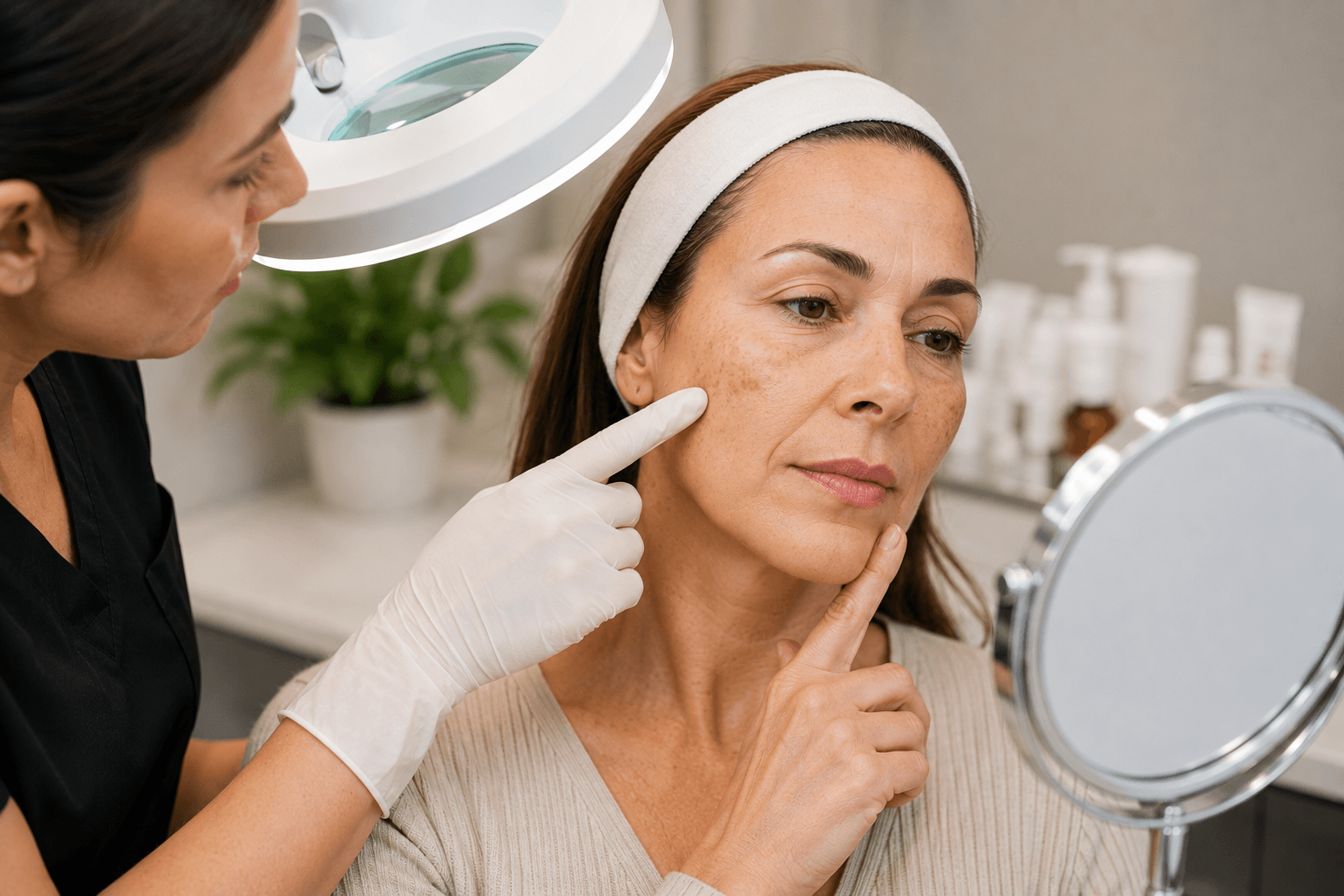
Not every dark patch on your skin came from the same place, even though most people lump them all together under one word. Some spots showed up after a summer on Presque Isle without enough sunscreen. Others appeared out of nowhere during pregnancy or after starting a new medication. Some are leftover shadows from a breakout that healed weeks ago but never quite faded. All of it gets called hyperpigmentation, but the cause matters a lot when it comes to picking a treatment that will actually work instead of one that just sits on the shelf.
If you have been staring at the same spot in the mirror for months wondering why your drugstore serum isn't touching it, this is for you. Understanding what type of pigmentation you're dealing with is the difference between wasting money and finally seeing your skin tone even out.
What Is Hyperpigmentation, Really?
Hyperpigmentation happens when certain areas of skin produce more melanin than the skin around them. Melanin is the pigment responsible for your natural skin tone, and it's produced by cells called melanocytes. When those cells get triggered, whether by sun exposure, hormones, inflammation, or injury, they can overproduce pigment in a concentrated spot, leaving behind a patch, freckle cluster, or larger area of discoloration that's noticeably darker than the surrounding skin.
The tricky part is that hyperpigmentation is really an umbrella term. It covers several distinct conditions that look similar on the surface but behave very differently underneath.
The Three Most Common Types of Hyperpigmentation
Melasma
Melasma tends to show up in larger, symmetrical patches across the forehead, cheeks, upper lip, or bridge of the nose. It's strongly linked to hormonal shifts, which is why it's so common during pregnancy, while taking birth control, or during perimenopause. Melasma is also notoriously sensitive to heat and sun, meaning it can darken again quickly even after it starts to fade, which is part of why it has a reputation for being stubborn.
Sun Spots (Solar Lentigines)
These are the small, flat, well-defined brown spots that accumulate on the face, chest, and hands after years of cumulative sun exposure. Unlike melasma, sun spots are not tied to hormones. They're a direct result of UV damage building up over time, and they tend to appear on areas that get the most consistent sun, like the tops of the cheekbones and the backs of the hands.
Post-Inflammatory Hyperpigmentation (PIH)
PIH is the dark mark left behind after the skin has been through some kind of trauma or inflammation, most commonly acne, but also eczema flare-ups, bug bites, or even an aggressive facial treatment done without proper aftercare. The spot itself isn't active anymore. It's essentially a bruise-like shadow that the skin created while healing, and it can take months to fade on its own without help.
Why Erie's Climate Makes Hyperpigmentation Harder to Manage
Erie's weather pattern creates a unique challenge for anyone dealing with pigmentation issues. Long, overcast winters near Lake Erie can lull people into skipping sunscreen, but UV rays still reach the skin through cloud cover, and reflection off snow can actually intensify exposure. Then summer arrives with strong, direct sun along the lakefront, and skin that hasn't been protected consistently reacts with a fresh wave of pigment production. That back and forth between low vigilance and high exposure is exactly the kind of pattern that keeps sun spots and melasma active instead of letting them fade.
How to Tell Which Type You Have
A few clues can point you in the right direction before you ever book an appointment. Melasma usually appears in larger, softer-edged patches and often mirrors on both sides of the face. Sun spots tend to be smaller, sharply defined, and scattered across areas with the most lifetime sun exposure. PIH follows the exact shape of whatever caused it, so a dark mark shaped like a pimple or a scratch is almost always PIH.
That said, many people have more than one type at once, which is exactly why a professional evaluation matters more than guessing based on an internet search.
Treatment Options That Actually Match Each Cause
IPL Photofacial for Sun Spots and Redness-Related Discoloration
An IPL photofacial uses targeted light energy to break up pigment in sun spots and reduce the appearance of redness, making it particularly effective for sun-related discoloration and for skin that shows both uneven tone and visible broken capillaries. Because it targets pigment directly, results on solar lentigines tend to be noticeable within a few sessions.
Chemical Peels for Surface-Level Discoloration and PIH
Chemical peels work by encouraging controlled exfoliation, which helps push pigmented cells to the surface faster so fresh, more evenly toned skin can take their place. This makes peels a strong option for post-inflammatory hyperpigmentation from acne, since the goal is speeding up the skin's natural turnover rather than targeting pigment at a deep structural level.
eCO2 Laser Resurfacing for Deeper or Long-Standing Pigment
For pigmentation that hasn't responded to lighter treatments, eCO2 laser skin resurfacing works at a deeper level to resurface skin and improve tone and texture together, which can be especially useful for long-standing discoloration paired with other concerns like fine lines or uneven texture.
Daily Habits That Support Your Treatment
No in-office treatment can outwork daily sun exposure. Broad-spectrum sunscreen, reapplied consistently, is the single biggest factor in whether pigmentation improvement actually lasts. This is especially true for melasma, which can be reignited by heat and UV exposure far more easily than other types of discoloration.
Who's a Good Candidate for Professional Pigmentation Treatment?
Most people with persistent, well-defined dark spots or patches that haven't responded to over-the-counter products are reasonable candidates for one of these approaches. The right fit depends on your skin type, the type of pigmentation involved, and how your skin has reacted to past treatments or sun exposure, which is why a proper skin evaluation matters before choosing a path forward.
What to Expect at a Skincare Consultation
A skincare consultation at Rejuverie Medspa starts with a close look at your skin under proper lighting, a conversation about your history with sun exposure, hormones, breakouts, or past treatments, and a plan built around the specific type of discoloration you're dealing with. You can browse the full list of options under lasers and energy devices or view the hyperpigmentation and melasma treatment page to see how these approaches fit together, and check current specials before booking.
This guide was updated in August 2026 to reflect current treatment approaches offered in Erie, Pennsylvania.
So, Ready to Give Those Dark Spots Their Eviction Notice?
Hyperpigmentation isn't one condition with one fix. It's a handful of different stories playing out on the same canvas, and the fastest path to clearer, more even skin is figuring out which story is actually yours. Once that's clear, choosing between a photofacial, a peel, or a resurfacing treatment stops feeling like guesswork.
Frequently Asked Questions
Can hyperpigmentation go away on its own? Post-inflammatory hyperpigmentation from a healed breakout can fade gradually over several months, but sun spots and melasma are much less likely to disappear without help, especially without daily sun protection.
Is melasma the same thing as sun spots? No. Melasma is driven primarily by hormones and tends to appear in larger, softer patches, while sun spots are small, well-defined marks caused by cumulative UV exposure over time.
How many treatments does hyperpigmentation usually take to fade? It depends on the type and depth of the pigment, but most people see gradual improvement over a series of sessions rather than after just one visit, since pigment sits at different layers of the skin.
Will hyperpigmentation come back after treatment? It can, particularly with melasma, which is why consistent sunscreen use and ongoing skincare are such an important part of maintaining results long after your last appointment.
What's the first step if I'm not sure what type of pigmentation I have? Booking a skincare consultation is the most reliable way to get an accurate read on what's causing your discoloration and which treatment will address it most directly.
