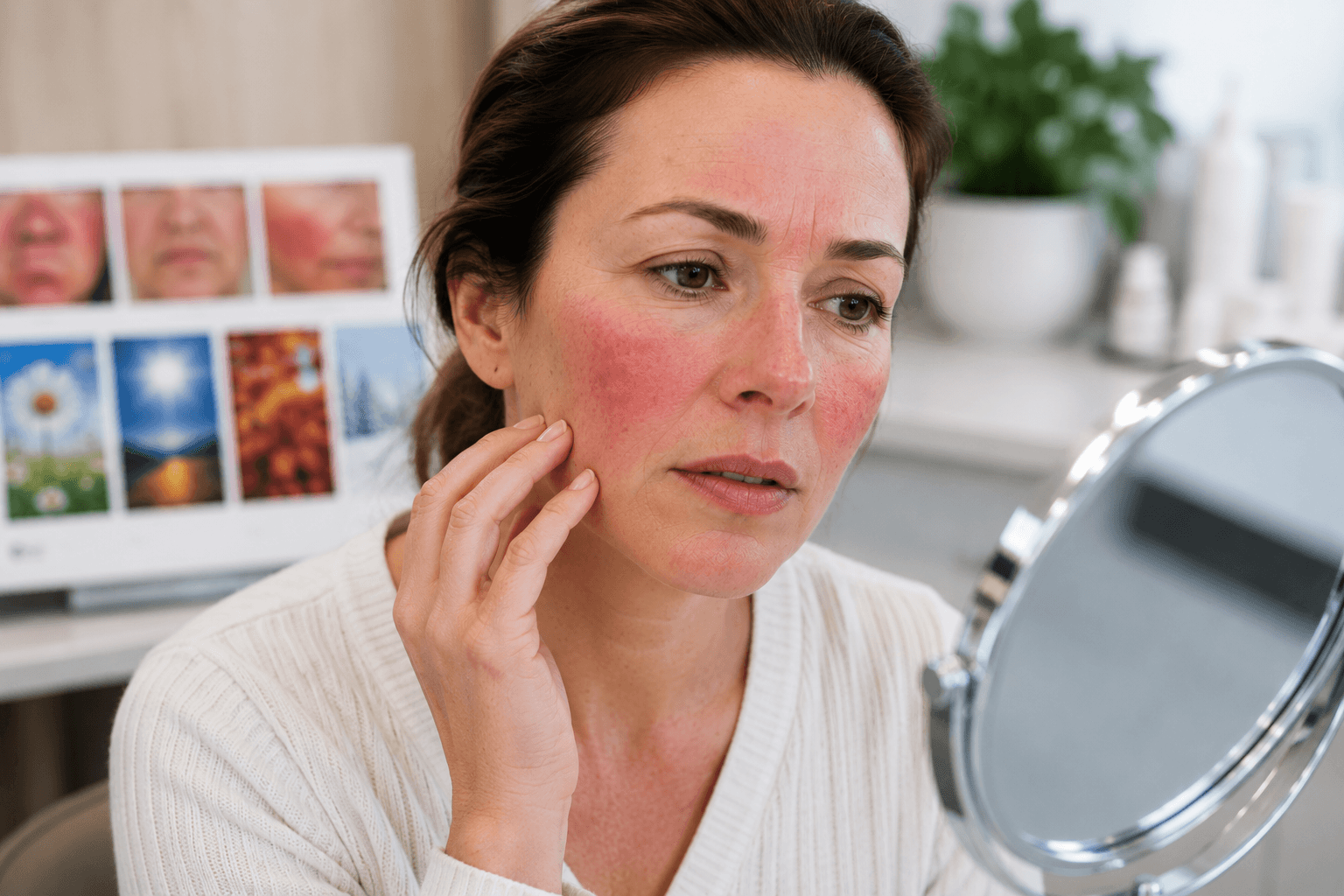
If your cheeks turn redder the moment you step outside in January, and stay that way long after you come back in, you are not imagining it. Rosacea has a well documented relationship with cold, wind, and sudden temperature changes, and Erie happens to deliver all three in heavy doses for months at a time. Understanding why your skin reacts the way it does is the first step toward actually managing it, rather than just waiting for spring.
What Is Rosacea, Exactly?
Rosacea is a chronic skin condition that causes facial redness, visible blood vessels, and in some cases small bumps that can resemble acne. It tends to affect the cheeks, nose, chin, and forehead, and it often comes and goes in flares rather than staying constant. Because the early signs can look like simple sensitivity or occasional flushing, many people live with it for years before recognizing the pattern or seeking rosacea and facial redness treatment.
Why Does Erie's Weather Make Rosacea Worse?
Rosacea flares are driven by triggers that cause blood vessels near the surface of the skin to expand. Several of the most common triggers happen to be built into an Erie winter.
Cold, Dry Wind
Wind coming off Lake Erie strips moisture from the skin and irritates an already sensitive barrier, which can trigger redness and stinging almost immediately.
Rapid Temperature Changes
Walking from a cold parking lot into an overheated building, or the reverse, forces blood vessels to constrict and then dilate quickly. That rapid shift is one of the most common rosacea triggers, and it happens constantly during an Erie winter commute.
Indoor Heating
Furnaces and space heaters dry out indoor air, which further stresses a compromised skin barrier already dealing with outdoor wind exposure.
Sun and Glare
It is not only winter. Reflected sun off snow in colder months and direct sun off the lake in summer both count as UV exposure, and sun is one of the most consistently reported rosacea triggers year round.
What Are the Signs You Might Have Rosacea, Not Just Sensitive Skin?
Occasional redness from cold or exercise happens to almost everyone. Rosacea tends to stand out because the redness lingers longer than expected, keeps returning in the same areas, and may be accompanied by visible small blood vessels, a burning or stinging sensation, or small bumps that do not respond to typical acne treatment. If that pattern sounds familiar, it is worth having your skin evaluated rather than assuming it will resolve on its own.
How Is Rosacea Treated?
There is no single fix for rosacea, but a combination of professional treatment and daily habits can significantly reduce how often and how severely it flares.
Laser and Light Based Treatments
Because rosacea related redness comes from visible blood vessels near the skin's surface, targeted light based treatments can reduce their appearance directly. Our IPL Photofacial is commonly used to address the redness and visible vessels associated with rosacea, and it is often discussed alongside our broader range of laser treatments during a consultation.
Chemical Peels Formulated for Sensitive Skin
Not every peel is appropriate for rosacea prone skin, but certain gentler formulations can help calm inflammation and improve overall skin resilience when chosen carefully. Our team can determine whether a chemical peel makes sense as part of your plan or whether your skin would respond better to a different approach first.
A Barrier First Skincare Routine
Because rosacea is closely tied to a compromised skin barrier, daily care matters as much as in office treatment. That typically means fragrance free products, gentle cleansing, and consistent moisturizing to help the skin hold up against wind and temperature swings.
Daily Habits That Help Manage Rosacea in Erie
Alongside professional treatment, a few adjustments can meaningfully reduce flare frequency during the harshest months.
Protect Your Face Outdoors
A scarf or high collar can act as a physical wind barrier during Erie winters, cutting down on one of the most direct rosacea triggers.
Ease Temperature Transitions
Where possible, avoid jumping straight from freezing air into blasting heat. Giving your skin a moment to adjust can reduce the shock that triggers flushing.
Wear Sunscreen Every Day, Even in Winter
Since sun and glare are triggers year round, daily broad spectrum sunscreen is one of the simplest habits for reducing rosacea flares, whether it is July on the lake or February on fresh snow.
Track Your Personal Triggers
Rosacea triggers vary by person and can include certain foods, alcohol, spicy dishes, or hot beverages in addition to weather. Keeping a simple log for a few weeks can help identify patterns specific to you.
When Should You See a Professional About Rosacea?
If redness is affecting your confidence, seems to be getting worse, or is not responding to over the counter products, it is worth a professional evaluation rather than continuing to guess at solutions. Rosacea can also resemble other skin conditions, so an accurate diagnosis matters before starting any treatment plan.
Building a Seasonal Skincare Routine Around Rosacea
Because rosacea triggers shift with the seasons in a lake effect climate, a static skincare routine often stops working partway through the year. Winter typically calls for richer, more protective moisturizers to combat wind and indoor heat, while summer calls for lightweight, non irritating sun protection that will not clog pores or trap heat against the skin. Building flexibility into your routine, rather than relying on the same products year round, tends to keep rosacea prone skin more stable through Erie's biggest weather swings.
What to Expect From an In Office Rosacea Consultation
A useful rosacea consultation typically starts with ruling out other conditions that can look similar, since misdiagnosing rosacea as simple sensitivity or acne can lead to the wrong treatment entirely. From there, your provider will usually ask about flare patterns, potential triggers, and any products or treatments you have already tried, before recommending a combination of in office treatment and at home care. Coming prepared with a rough timeline of when your redness started and what seems to make it worse can help your provider build a more targeted plan from the very first visit.
Frequently Asked Questions About Rosacea Treatment in Erie, PA
Can rosacea be cured completely? Rosacea is a chronic condition, which means it is typically managed rather than cured outright. Many people see significant improvement in redness and flare frequency with the right combination of treatment and daily care.
Is rosacea the same as regular acne? No. While rosacea can produce small bumps that resemble acne, the underlying cause is different, and treating it like standard acne can sometimes make redness worse.
Does cold weather really trigger rosacea, or is that a myth? It is well documented. Cold wind, rapid temperature shifts, and dry indoor heat are all recognized rosacea triggers, which is part of why flares often increase during Erie's winter months.
What treatment works best for rosacea redness specifically? Light based treatments like IPL Photofacial are commonly used to target the visible blood vessels responsible for persistent redness, often alongside a supportive skincare routine.
Can I still get facials or peels if I have rosacea? Some treatments are appropriate and others are not, depending on your specific skin. A consultation helps determine which options will calm your skin rather than aggravate it.
Giving Your Skin a Break From Erie's Weather
Rosacea does not have to mean accepting redness as permanent, especially once you understand what is actually triggering it. Our team at Rejuv Medspa can build a treatment plan suited to your skin and your season. Contact us in Erie, PA to schedule a consultation, or browse our complete medspa services to see how rosacea care fits alongside your other skin goals.