
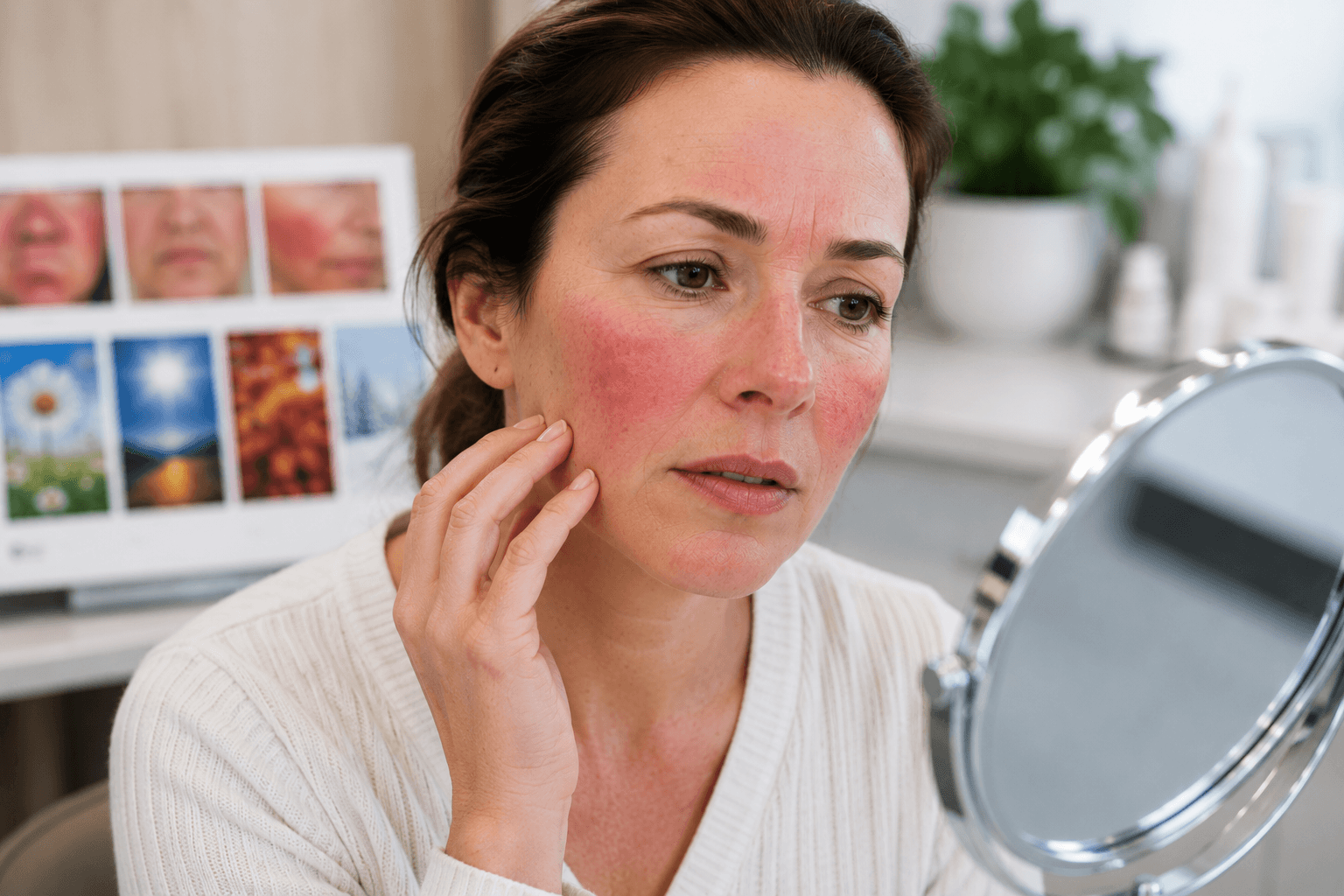
If your face seems to flush at the worst possible moments, whether it's stepping outside into a cold wind off the lake, finishing a glass of wine, or just walking into a warm room after being out in the cold, you already know rosacea doesn't play by predictable rules. What a lot of people don't realize is that rosacea isn't one single condition with one single trigger list. It shows up in different subtypes, and figuring out which one you're dealing with makes a real difference in how you manage it.
Rosacea Is More Than Just Redness
Rosacea is a chronic skin condition that primarily affects the face, causing persistent redness, visible blood vessels, bumps, or a combination of all three. It tends to come and go in flare-ups rather than staying constant, and it disproportionately affects people with fair skin, though it can develop in any skin tone. The exact cause isn't fully understood, but it's believed to involve a combination of genetics, an overactive inflammatory response, and blood vessel sensitivity.
The Main Subtypes of Rosacea
Erythematotelangiectatic Rosacea
This subtype is defined by persistent redness and visible small blood vessels, often described as flushing that doesn't fully go away between episodes. It's frequently the earliest form people notice, sometimes mistaken for simply having sensitive or easily blushing skin.
Papulopustular Rosacea
This version includes redness along with small red bumps and sometimes pus-filled pimples, which is why it's often confused with adult acne. The key difference is that rosacea bumps tend to cluster on the central face and appear alongside broader redness and sensitivity rather than the blackheads typically seen with acne.
Phymatous Rosacea
A less common but more advanced subtype, phymatous rosacea involves thickening of the skin, most often around the nose, giving it a bumpy or enlarged appearance over time. This form typically develops after years of untreated inflammation.
Ocular Rosacea
Rosacea doesn't always stay confined to the skin. Ocular rosacea affects the eyes, causing dryness, irritation, and a gritty feeling, and it can occur alongside any of the other subtypes or occasionally on its own.
What Actually Triggers Rosacea Flare-Ups in Erie
Certain triggers are well documented across rosacea research, and several of them are especially relevant to life in Erie. Cold, windy conditions off Lake Erie are a well known trigger for facial flushing, and the dramatic swing between icy outdoor air and heated indoor spaces during Erie winters can set off a flare almost immediately. Come summer, direct sun exposure along the lakefront is one of the most consistently reported rosacea triggers.
Beyond weather, common triggers include spicy foods, alcohol, hot beverages, intense exercise, stress, and certain skincare ingredients that are too harsh for already reactive skin. Everyone's trigger list looks a little different, which is part of why tracking your own flare-ups over a few weeks can be more useful than following a generic list.
Why Rosacea Gets Worse If It's Left Alone
Because rosacea is an inflammatory condition, repeated flare-ups without any intervention can gradually worsen the baseline redness and increase the visibility of blood vessels over time. This is part of why earlier subtypes like erythematotelangiectatic rosacea can, in some cases, progress toward more advanced changes if the underlying inflammation and vascular sensitivity are never addressed.
Treatment Options That Target Rosacea Directly
IPL Photofacial for Redness and Visible Vessels
An IPL photofacial uses light energy to target the blood vessels responsible for persistent redness, which makes it one of the more direct options for erythematotelangiectatic rosacea and the visible vessel component of other subtypes. Many people notice a gradual reduction in overall redness and flushing intensity across a series of sessions.
Microneedling for Overall Skin Resilience
Microneedling can support skin barrier health and encourage more balanced skin renewal, which some rosacea sufferers find helpful as part of a broader management plan, particularly when used carefully and spaced appropriately around active flare-ups.
A Personalized Skincare Approach
Because rosacea-prone skin reacts poorly to harsh actives and fragrance, building a gentle, barrier-supporting skincare routine matters just as much as any in-office treatment. A skincare consultation can help identify which products are quietly triggering flare-ups without you realizing it.
The Emotional Side of Rosacea That Often Gets Overlooked
Beyond the physical symptoms, persistent facial redness can take a toll that has nothing to do with skin at all. Many people with rosacea describe feeling self-conscious in social or professional settings, avoiding certain lighting, or feeling like strangers are reading unwarranted embarrassment or stress into their face when they're actually perfectly calm. This is worth naming because it's often the real reason someone finally books a consultation, not just the redness itself, but the frustration of a condition that seems to broadcast a mood you don't actually have.
Building a Rosacea-Friendly Daily Routine
Alongside professional treatment, small daily adjustments can meaningfully reduce how often flare-ups happen. Switching to fragrance-free, non-abrasive cleansers, avoiding hot water on the face, using a broad-spectrum mineral sunscreen year-round, and keeping a simple log of what you ate, drank, or did before a flare can help identify patterns specific to your own skin rather than relying on a generic trigger list. Over time, this kind of tracking often reveals one or two dominant triggers that make the biggest difference once they're addressed consistently.
Who Should Consider Professional Rosacea Treatment
If over-the-counter creams and avoiding your known triggers still aren't keeping redness under control, or if you're noticing bumps, visible vessels, or thickening skin that hasn't improved, it's a reasonable point to bring in professional support rather than continuing to manage it alone.
What to Expect During a Rosacea Consultation
A consultation at Rejuverie Medspa in Erie, Pennsylvania typically starts with identifying which subtype and triggers seem most relevant to your skin, followed by a treatment plan that might combine IPL, a supportive skincare routine, and practical trigger management specific to your daily life and Erie's climate. You can review the rosacea and facial redness treatment page or explore additional lasers and energy device options, and check current specials before booking.
This guide was updated in August 2026 to reflect current rosacea treatment approaches offered in Erie, Pennsylvania.
Time to Stop Letting Your Face Do All the Talking?
Rosacea can feel unpredictable, but it usually isn't random once you understand which subtype you're dealing with and which specific triggers keep setting it off. With the right combination of trigger awareness, a gentler skincare routine, and treatment aimed at the vessels causing the redness, calmer, more even-toned skin is a realistic goal rather than a long shot.
Frequently Asked Questions
Is rosacea the same thing as adult acne? No, though papulopustular rosacea can look similar. Rosacea bumps typically appear alongside broader facial redness and sensitivity, while acne is more commonly associated with blackheads and occurs across a wider range of skin types and ages.
Can rosacea be cured completely? Rosacea is generally considered a chronic condition that's managed rather than cured, though consistent trigger avoidance and appropriate treatment can significantly reduce both the frequency and severity of flare-ups.
Does cold weather really make rosacea worse? Yes, cold and windy conditions are one of the most commonly reported rosacea triggers, and the sharp temperature swings common in Erie winters can make flare-ups more frequent for many people.
How long does it take to see results from rosacea treatment? Most people notice gradual improvement in redness and flushing over a series of sessions rather than an immediate change, since the goal is calming an ongoing inflammatory pattern rather than treating a single event.
Should I stop using all my skincare products if I have rosacea? Not necessarily, but many products contain fragrance or harsh actives that can aggravate rosacea-prone skin, so it's worth having your routine reviewed to identify anything that might be working against you.
