
Updated July 2026
Hyperpigmentation is one of the most common reasons people seek professional skincare treatments. Whether it's lingering acne marks, sun spots after years of UV exposure, or discoloration caused by hormonal changes, uneven skin tone can be frustrating to manage with over-the-counter products alone.
Fortunately, professional chemical peels can help improve many forms of discoloration by encouraging healthier skin renewal. When customized to your skin type and concerns, these treatments can gradually reduce the appearance of dark spots while improving overall skin texture and radiance.
If you're considering a chemical peel in Erie, PA, understanding how these treatments work and which options may be appropriate for your skin can help you make a more informed decision.
Why Does Hyperpigmentation Develop?
Hyperpigmentation occurs when certain areas of the skin produce excess melanin, the pigment responsible for skin color. While harmless, these darker patches often become more noticeable over time.
Common causes include:
- Sun exposure
- Acne breakouts
- Inflammation or skin injuries
- Hormonal fluctuations such as melasma
- Aging
- Certain medications
Although hyperpigmentation can affect anyone, treatment approaches often vary depending on the underlying cause, skin tone, and how long the discoloration has been present.
Which Types of Hyperpigmentation Respond Best to Chemical Peels?
Not every type of discoloration responds the same way, but many patients see improvement with professional peel treatments.
Post-Inflammatory Hyperpigmentation (PIH)
Dark marks left behind after acne, insect bites, or skin irritation often respond well because chemical peels help accelerate skin turnover.
Sun Damage
Years of UV exposure can lead to freckles, age spots, and uneven pigmentation. Professional peels may gradually soften these areas while improving overall skin clarity.
Melasma
Melasma can be more challenging because hormonal factors contribute to pigment production. While chemical peels may help improve its appearance, treatment usually works best as part of a comprehensive skincare plan combined with diligent sun protection.
How Does a Chemical Peel Reduce Dark Spots?
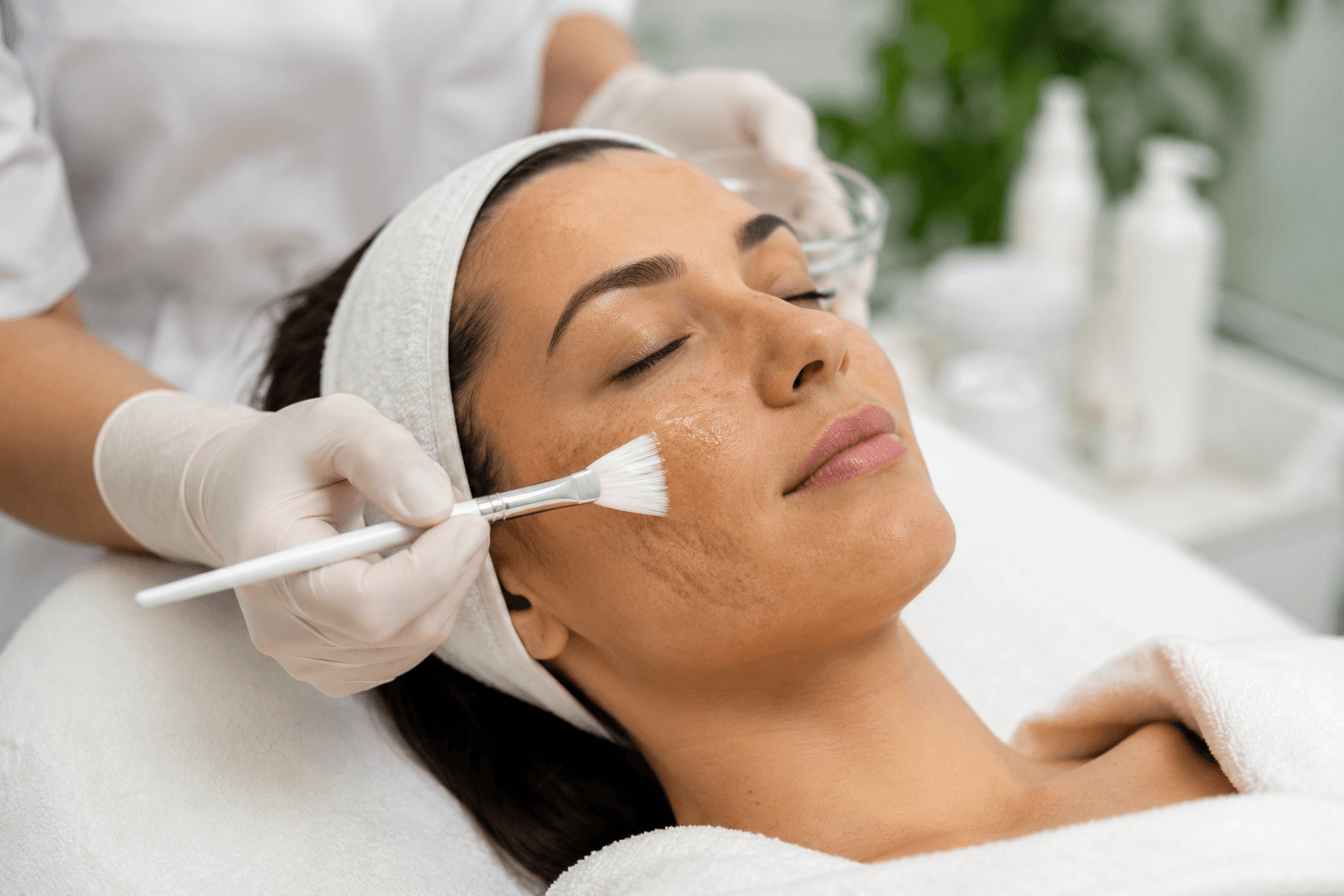
A chemical peel works by applying a specialized solution that exfoliates damaged outer skin layers.
As treated skin naturally sheds, healthier skin cells replace older pigmented cells, helping create a smoother and more even complexion.
Professional chemical peels may help:
- Improve uneven skin tone
- Reduce visible sun damage
- Fade post-acne marks
- Brighten dull-looking skin
- Improve overall texture
- Stimulate healthier skin renewal
Results typically develop gradually over several weeks as the skin continues its natural healing process.
Which Chemical Peel Works Best for Hyperpigmentation?
There is no single "best" peel for everyone. The ideal treatment depends on your skin type, pigment depth, medical history, and treatment goals.
ReJuv offers several professional peel options that may be recommended during your consultation.
VI Peel®
VI Peel® is one of the most popular options for improving discoloration and overall skin quality.
It combines multiple acids to:
- Improve uneven pigmentation
- Minimize acne marks
- Brighten dull skin
- Enhance skin texture
- Encourage collagen production
Many patients appreciate its balance between noticeable results and manageable downtime.
Glytone® Peels
Glytone® peels use glycolic acid to exfoliate the skin and encourage healthy cell turnover.
These peels may benefit patients experiencing:
- Mild sun damage
- Uneven tone
- Fine lines
- Early pigmentation concerns
Epionce® Peels
Epionce® peels provide gentle resurfacing while supporting skin barrier health.
They may be appropriate for individuals seeking gradual skin brightening with minimal downtime.
SkinMedica® Peels
SkinMedica® offers physician-grade chemical peel systems designed to improve:
- Hyperpigmentation
- Skin texture
- Fine lines
- Overall complexion
Treatment recommendations vary depending on each patient's skin condition.
PRX Derm Perfexion®
PRX Derm Perfexion® is a unique skin revitalization treatment that stimulates collagen without the extensive peeling often associated with traditional chemical peels.
Some patients choose this option to improve:
- Skin firmness
- Texture
- Overall brightness
Your provider can determine whether this approach is appropriate for your specific concerns.
ZO® Skin Health Peels
ZO® Skin Health offers several peel options, including the well-known ZO® 3-Step Peel.
These professional treatments may help improve:
- Uneven pigmentation
- Sun damage
- Fine lines
- Overall skin quality
The strength and formulation are selected based on your skin assessment.
What About Specialty Peels?
Some specialty peels are commonly discussed in professional skincare.
These include:
- Mal-e-Peel
- MA (Mandelic Acid) Peel
- Sal-e-Peel
These formulations are designed to address different skin concerns, and suitability depends on individual skin characteristics. Your skincare provider will determine whether these or other peel options are appropriate during your consultation.
How Many Chemical Peel Treatments Are Usually Recommended?
Many patients notice brighter skin after a single treatment, but hyperpigmentation often requires a series of sessions for optimal improvement.
Your treatment plan may depend on:
- Type of pigmentation
- Skin sensitivity
- Peel strength
- Desired results
- Home skincare routine
For many pigmentation concerns, providers commonly recommend multiple treatments spaced several weeks apart, allowing the skin to heal between sessions.
Consistency typically produces better long-term improvement than a single aggressive treatment.
What Should You Expect After a Chemical Peel?
Recovery varies depending on the type of peel performed.
Most patients experience temporary:
- Mild redness
- Tightness
- Dryness
- Flaking or peeling
These effects are part of the normal renewal process.
It's important not to pick peeling skin, as this may interfere with healing and increase the risk of unwanted pigmentation changes.
Following your provider's aftercare instructions is essential for achieving the best possible outcome.
What Skincare Products Help Maintain Results?
Professional treatment is only part of maintaining brighter skin.
Daily skincare plays an equally important role in preventing future discoloration.
Your provider may recommend products that include ingredients such as:
- Vitamin C
- Retinoids
- Niacinamide
- Growth factors
- Brightening agents
- Professional moisturizers
Most importantly, sunscreen should become a daily habit.
Even brief UV exposure can trigger new pigmentation and reduce the longevity of your results.
Using a broad-spectrum SPF 30 or higher every day helps protect your investment in professional treatments.
Can Chemical Peels Help with Rosacea?
Rosacea treatment requires a careful, individualized approach.
While certain gentle exfoliating treatments may be appropriate for some individuals with well-managed rosacea, not every chemical peel is suitable for sensitive or reactive skin.
If redness is your primary concern, your provider will first evaluate whether a chemical peel is appropriate or whether another treatment approach would better support your skin health.
Is a Chemical Peel in Erie a Good Option for Treating Discoloration?
If you're bothered by dark spots, acne marks, uneven skin tone, or sun damage, a professional chemical peel in Erie may be worth exploring.
The key is personalization.
A comprehensive skin evaluation helps determine:
- The cause of your pigmentation
- Your skin type
- Your tolerance for downtime
- Which professional peel may provide the safest and most effective results
Rather than relying on one-size-fits-all solutions, customized treatment plans often deliver more predictable improvements while supporting long-term skin health.
Frequently Asked Questions
Can one chemical peel completely remove hyperpigmentation?
Sometimes mild discoloration improves significantly after one treatment, but most pigmentation concerns benefit from a series of professional chemical peels combined with consistent skincare.
Which chemical peel is best for acne marks?
The ideal treatment depends on your skin type and the depth of pigmentation. Professional evaluation helps determine whether options like VI Peel®, Glytone®, SkinMedica®, or another peel may be appropriate.
How long do chemical peel results last?
Results vary depending on sun exposure, skincare habits, and your skin condition. Consistent sunscreen use and professional skincare products can help maintain improvements.
Are chemical peels painful?
Most patients describe a temporary tingling, warming, or mild stinging sensation during treatment. These feelings usually resolve shortly after the peel is completed.
Can all skin tones receive chemical peels?
Many professional chemical peels can be safely customized for various skin tones. Choosing an experienced provider is important because treatment selection helps reduce the risk of unwanted pigmentation changes.
When will I start seeing brighter skin?
Many people notice improvements after the initial healing process, while continued brightening often develops over the following weeks. Multiple treatments generally produce the most noticeable results.
Let Your Skin Steal the Spotlight Again
Hyperpigmentation doesn't have to define your complexion forever. With the right professional guidance, customized chemical peel treatments, and a thoughtful skincare routine, many forms of discoloration can gradually become less noticeable while your skin looks healthier, smoother, and more radiant.
If you're exploring options for treating uneven skin tone, scheduling a professional consultation is the best first step toward finding the treatment plan that's right for your unique skin and long-term goals.
.webp)