
Updated for September 2026.
Walk into any skincare conversation in Erie and you will hear the word laser thrown around like it means one single thing. It does not. There are lasers built to erase sun spots, lasers built to calm redness, lasers built to smooth texture, and lasers built to remove hair or ink for good. The trick is not deciding whether laser treatments work. It is figuring out which one actually matches what is happening on your skin.
That distinction matters even more here on the shore of Lake Erie, where the skin goes through a genuine seasonal beating. Long gray winters bring dry, wind chapped skin and lake effect snow glare that still carries UV exposure. Summers on the water bring hours of direct sun that most people underestimate because the breeze off the lake makes it feel cooler than it is. By the time fall rolls around, a lot of local skin is dealing with a mix of sun damage, dullness, visible vessels, and uneven tone all at once. A single generic laser treatment rarely addresses all of that. A targeted one does.
This guide breaks down the most common skin concerns we see at Rejuv Medspa and which laser treatments are typically used to address each one, so you can walk into a consultation already knowing the right questions to ask.
What Skin Concerns Actually Respond to Laser Treatment?
Before choosing a device, it helps to name the problem in plain terms. Most people searching for laser treatments are really asking about one of these:
Brown Spots, Sun Damage, and Uneven Tone
Years of sun exposure, including the deceptive kind you get squinting at the lake in July, show up as flat brown or tan patches, often on the cheeks, forehead, and hands. This is one of the most common reasons people in Erie look into hyperpigmentation treatment. Lasers that target pigment specifically, such as the Spectra platform used in our melasma laser treatment, work by breaking up excess pigment so the body can clear it naturally.
Redness, Flushing, and Visible Vessels
Persistent redness across the cheeks and nose, especially the kind that flares in cold, windy weather, is often connected to rosacea and facial redness. Some laser and light based treatments are designed to target the tiny blood vessels responsible for that redness rather than pigment in the skin.
Rough Texture, Enlarged Pores, and Acne Scarring
If your skin feels bumpy or your pores look larger than they used to, resurfacing lasers are typically the answer. Devices like our eCO2 Skin Resurfacing Laser and MOSAIC 3D Laser Resurfacing work below the surface to encourage smoother, more even skin over time, which is also useful for some acne and acne scar concerns.
Dull, Tired Looking Skin
Skin that looks flat or lacks radiance, particularly after a long Erie winter, often benefits from a resurfacing or exfoliating laser treatment such as the Hollywood Carbon Laser Peel, which is designed to leave skin brighter and smoother in a single session with very little downtime. This is a frequent recommendation for anyone dealing with dull complexion.
Unwanted Hair
This one is more straightforward. If the concern is ongoing shaving, waxing, or ingrown hairs, laser hair removal uses targeted light energy to reduce hair growth over a series of sessions, and it remains one of the most requested treatments for unwanted hair at our Erie location.
Old Tattoos or Visible Leg Veins
Laser technology is also used outside of facial skin. Laser tattoo removal breaks down ink particles gradually across sessions, while laser leg vein removal targets small spider veins that become more noticeable with age or sun exposure.
Why One Laser Does Not Fit Every Skin Concern
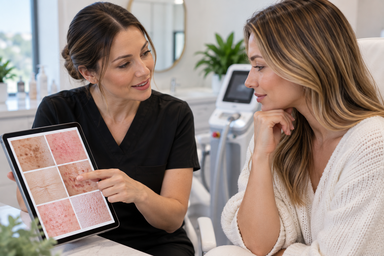
Lasers work by targeting a specific structure in the skin, whether that is pigment, water, blood vessels, or hair follicles. A device tuned to break up pigment is not built to shrink a blood vessel, and a resurfacing laser is not designed the same way as a hair removal laser. That is why an accurate diagnosis matters more than the word laser itself. During a consultation at our Lasers and Energy Devices category of services, our team looks at your specific skin type, tone, and concern before recommending a device, since the wrong match can mean wasted sessions or results that fall short of expectations.
How Many Sessions Does Laser Treatment Usually Take?
Most laser treatments are not a single visit fix. Pigment correction and resurfacing typically require a series of sessions spaced several weeks apart to give skin time to heal and regenerate between treatments. Hair removal follows a similar multi session pattern because hair grows in cycles, and a laser can only effectively treat hair that is in an active growth phase at the time of your appointment. Your provider will map out a realistic timeline based on your goals during your consultation.
What Does Recovery Look Like?
Downtime varies significantly depending on the device and the depth of treatment. Many light based treatments involve little more than mild redness for a few hours, similar to a light sunburn, while deeper resurfacing treatments may involve a few days of visible peeling or pinkness. Whatever the treatment, sun protection afterward is non negotiable, especially given how much reflected UV comes off the lake and snow here in Erie during different times of year.
Who Is a Good Candidate for Laser Treatment?
Good candidates are generally in good general skin health, free of active infections in the treatment area, and realistic about the number of sessions needed. Certain skin tones and conditions require specific device settings or an alternative approach altogether, which is exactly why a proper consultation, rather than a quick online quiz, is the right first step. If you are unsure whether laser treatment is the right fit for your skin, our team can walk you through your options and compare them with non laser alternatives such as chemical peels or microneedling if those turn out to be a better match.
What Should You Ask During a Laser Consultation?
A good consultation should feel more like a conversation about your specific skin than a sales pitch for a single device. Before agreeing to any treatment plan, it is worth asking what concern the recommended laser is actually designed to target, how many sessions are typically needed to see results, and what the realistic timeline looks like between now and your goal. It is also fair to ask whether a non laser option, such as a peel or microneedling, might get you to the same result with less downtime. A provider who takes the time to answer these questions thoroughly, rather than rushing toward a booking, is usually a good sign you are in the right hands.
Preparing Your Skin Before a Laser Treatment
A little preparation goes a long way toward getting the most out of any laser session. Most providers recommend avoiding significant sun exposure and tanning in the weeks leading up to treatment, since sun exposed skin can be more sensitive and may not respond as predictably to certain devices. Depending on the treatment, you may also be asked to pause certain retinol or exfoliating products for a few days beforehand. Coming into your appointment with clean skin, free of makeup or heavy product, also helps your provider get a clear, accurate view of what they are working with.
Frequently Asked Questions About Laser Treatments in Erie, PA
Does laser treatment hurt? Most patients describe sensations ranging from a warm tingle to a quick snapping feeling, depending on the device and treatment area. Topical numbing is available for treatments where comfort is a bigger concern.
How soon will I see results from laser treatment? Some treatments show visible improvement within days, while pigment and resurfacing treatments often reveal their full results over several weeks as the skin continues to regenerate.
Can laser treatments help with more than one concern at once? Yes, in many cases. Someone dealing with both sun spots and rough texture, for example, may benefit from a treatment plan that combines more than one approach, which your provider can outline during your visit.
Is laser treatment safe for all skin tones? Certain lasers are better suited to certain skin tones than others. This is one of the most important reasons to have an in person evaluation rather than assuming any laser will work the same way for everyone.
How do I know if I need laser treatment or a chemical peel instead? It depends on the depth and type of concern. Superficial dullness may respond well to a peel, while deeper pigment or vascular concerns often call for laser energy. A consultation is the fastest way to get a clear answer.
The Bottom Line on Choosing Your Laser Match
Skin concerns are personal, and so is the science behind treating them. Rather than searching for the single best laser treatment, the more useful question is which laser treatment is best for what your skin is actually dealing with right now. If you are ready to find out, schedule a consultation with Rejuv Medspa or browse our full list of medspa services to see how laser treatments fit into a broader skincare plan built around your goals.
